Doylestown Natural Medicine Center - Healthcare Is About So Much More Than Managing Symptoms
Resources
Testimonials
"When I was invited to attend an open house, I jumped at the opportunity. I didn't exactly know what I needed but I knew that I needed some help. It was that evening that I met Dr. Finger and I thank God every day for leading me to her! She simply became my partner in improving my health. From guiding me in my diet to helping me with supplements, she helped me replace habits that were harmful for ones that supported good health! My symptoms disappeared within 3 days, something I still find amazing since I had experienced my condition for so long. I was highly motivated and as each week passed I began to feel better and better. Today, I feel better than I have felt in my whole life! Dr. Finger continues to guide me, tweaking my specific program as needed. My health and blood test results continue to improve dramatically. I have not taken Lipitor for 1 year. An added bonus is that I lost 30 lbs and at 53 years old feel like I am 40!
Regaining the control over my health is a powerful feeling. It continues to motivate me every day. There is hope. With Dr Finger's guidance good health, energy and overall well-being can be restored. I am living proof!"
-AP
"Thank you again for all your help. It is really nice to feel like I'm on the right path finally. I have struggled with so many of these problems all my life and just two hours with you (and a month of working on my health) I finally feel relief. Thank you for listening. I can see it is making all the difference." -LS
"You were not just my doctor in the natural sense but also one I could talk to about anything. You are a gem! Bucks County is getting the best!" -BW
"As someone who believes in the body’s natural ability to heal itself, I was so thrilled when I began my care with Dr. Alison. Her approach and philosophy to health and healing is something I truly believe in and her knowledge and compassion are unsurpassed.“
“Dr. Finger has been such a blessing in my life and has provided healthcare that focuses on me as a whole person and does not just target a symptom. It is so refreshing to have a doctor that truly cares about your overall health and well-being and who is willing to patiently work with you to help your body to heal itself with the aid of natural herbs and homeopathic remedies.“
“Dr. Alison is always available to answer any questions or concerns I may have which is so comforting and unlike my typical relationship with other doctors. I look forward to continuing my healthcare with Dr. Alison and I can’t recommend her highly enough." -JK
"You were a light for me in a dark time in my life, it was coming to you years ago that began my journey that I am still on for personal health and happiness. You are so understanding and never judgmental. I know you will be successful in all you do. Thanks again!!" -CB
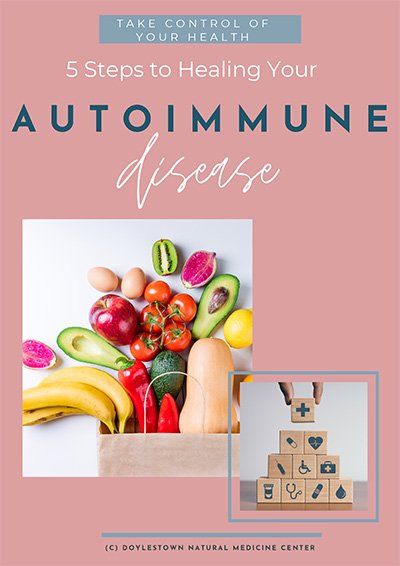
5 Steps To Healing Autoimmune Disease
Sign up for our Mailing List and Get the Free Guide
Lead Magnet Download
What is Functional Medicine Testing?
The exact testing varies per each individual case, but may include:
Blood Tests- Gluten Sensitivity, Food Sensitivity
- Alletess Medical Laboratory-Food Sensitivity Testing
- Dr. Finger does not write for conventional blood work in the State of PA, but is happy to make suggestions and work collaborative approach with other specialists or primary care physicians whenever she an to create a team support system for each patient
Advanced Comprehensive Stool Testing- screen for beneficial bacteria counts, yeast, parasites, intestinal inflammation, leaky gut, dysbiosis
- Diagnostics Solutions Laboratory- GI-MAP
- Doctor’s Data Laboratory
SIBO Breath Testing (Small Intestine Bacterial Overgrowth)
Genetic Testing for methylation and detox pathways
- 23 and me – patients order directly online
Hormone Testing- Saliva, Urine- Adrenal and Sex Hormone
- Precision Analytical- DUTCH Testing
Organic Acids Testing (OATS)- The OAT test offers a comprehensive metabolic view of one’s overall health with over 70 markers and can be helpful when looking at behaivoral disorders, hyperactivity, fatigue, nutrition and immune function
- Great Plains Laboratory- OAT
What is Naturopathic Medicine?
Naturopathic Medicine employs therapies that support and promote the body’s natural healing process, such as clinical nutrition, exercise, herbal medicine, homeopathy, and lifestyle counseling.
Naturopathic medicine addresses the underlying cause of disease, not merely managing the symptoms. Most conventional medical treatments today are designed to control symptoms. For example, if a person has high blood pressure, he or she may take an anti-hypertensive medication or if a person has high cholesterol, a drug is given that stops the liver from producing cholesterol. These treatment options are valuable to us, yet they do not address why the individual is having the symptom in the first place. Naturopathic medicine addresses the underlying problem that has created the symptom. Symptoms are important; they are the way the body talks to us. Naturopathic medicine will palliate (alleviate) symptoms when needed to allay suffering but a Naturopathic doctor is always seeking answers to the question of the underlying cause.
The six principles of naturopathic medicine are:
1. The Healing Power of Nature (The Body has an Inherent Wisdom to Heal)
2. First Do No Harm
3. Identify and Treat the Cause
4. Treat the Whole Person
5. Doctor As Teacher
6. Prevention is Cure
Training
Naturopathic doctors (NDs) are family practice oriented primary care doctors. Naturopathic training consists of at least four years at an accredited graduate level Naturopathic Medical School. The Naturopathic colleges in the United States are accredited by the Council on Naturopathic Medical Education, a special accreditor recognized by the U.S. Department of Education. The first two years of schooling mirror those of a conventionally trained Medical Doctor, the majority of classes consisting of basic sciences. The additional two to four years consists of specialized academic courses (cardiology, EENT, gynecology, dermatology, etc) as well as courses in Naturopathic therapeutics such as clinical nutrition, homeopathy, botanical medicine, body work, and lifestyle counseling.
After graduation, ND’s must pass a national board examination, the Naturopathic Physicians Licensing Exam (NPLEX), and attain a state license where available. Dr. Finger has between 1100 and 1800 hours in teaching clinics and over 600 patient visits prior to receiving her doctorate. In private practice, she has personally seen over 1000 patients.
In licensed states Naturopathic Doctors practice as primary care physicians, with the ability to diagnose and treat medical conditions, perform physical exams, and order laboratory testing. In unlicensed states, like Pennsylvania, Naturopathic Doctors are not able to provide all of the services they are trained to provide. Naturopathic doctors in unlicensed states act as health and wellness consultants and do not replace care with a primary care physician.
Virtual Consults Available!
info@doylestownnaturalmedicine.com
140 East State Street
Doylestown, PA 18901
Fax : 267-394-7741
Business hours:
Mon : 9am - 2pm (closed on Mondays Jun - Sep)
Tue : 9am - 6pm
Wed : 9am - 3pm
Thu : 9am - 5pm
Fri : closed